

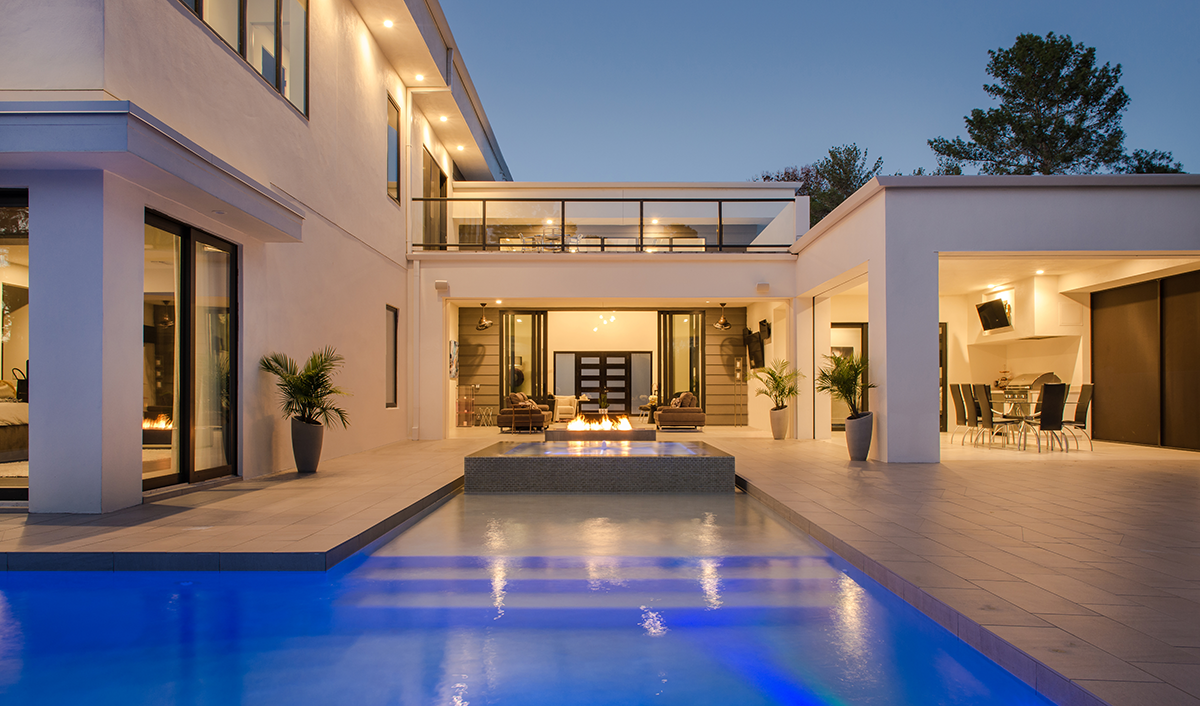
Great Lighting Doesn't Happen by Accident
Great lighting transforms a home. It reveals the true color of your finishes, sets the mood for every room, supports your circadian rhythm, and makes your architecture feel intentional from morning to night. But that kind of lighting doesn't come from choosing fixtures off a shelf or laying out recessed cans on a symmetrical grid. It comes from a deliberate, professional design process that considers every layer of light in every room before a single fixture is ordered.
Through our partnership with Lutron, VIP Smart Homes connects clients with Lutron's professional lighting designer referral network, one of the most experienced in the industry, with decades of expertise designing systems for the world's most sophisticated residences. Whether you're building new or reimagining an existing space, we manage the entire process on your behalf, coordinating directly with the lighting designer to deliver a lighting plan engineered around how you live.
The result isn't just a fixture schedule. It's a complete lighting experience. Every downlight placed for function and beauty, every cove detail designed for atmosphere, every scene programmed to match how your family actually uses each room throughout the day.
Two Programs. One Goal.
Whether you need a focused ceiling layout or a comprehensive whole home lighting plan, we offer two design programs, both backed by Lutron's referral network of professional lighting designers and managed entirely by VIP Smart Homes.
The Focused Ceiling Layout
$2 per square foot USD$5,000 minimum · 4 week average turnaround
A targeted design for ceiling lighting: downlights and linear coves. Ideal for homeowners who need a professional fixture layout and ordering schedule without full service design involvement.
The Complete Lighting Design
Custom Quoted by Lighting DesignerA comprehensive design covering every layer of light in your home: ceiling, decorative, accent, exterior, millwork, under cabinet, and more. Includes on site visits, photometric calculations, renderings, and commissioning support.
Inside Each Design Program
Both programs follow the same proven structure: a design kick off meeting, a preliminary plan review with one round of revisions, and a final review meeting that closes out the deliverables. The difference is scope. The Lighting Layout focuses exclusively on architectural ceiling lighting. Full Service Design covers every fixture in your home and includes on site work.
The Focused Ceiling Layout
$5,000 non refundable minimum · 4 week average
A focused architectural ceiling lighting design. Perfect for homeowners who already know their decorative direction but need professional eyes on the placement, beam angles, and zoning of every recessed downlight and linear cove.
What's Included
- 3 design meetings with the lighting designer (kick off, preliminary plan review, final review)
- Lighting Plan delivered as PDF with one round of revisions
- Fixture Schedule delivered as CSV with model numbers and quantities for ordering
- Architectural ceiling lighting design (downlights and linear coves)
- Control zone mapping for scene programming
- Approximately 4 week turnaround when responses are received within 48 hours
- Remote service (no on site visits)
Decorative chandeliers, exterior fixtures, accent lighting, millwork lighting, under cabinet lighting, track lighting, photometric calculations, renderings, and on site work are not part of this program. They are part of Full Service Design.
The Complete Lighting Design
Project dependent timeline · Includes on site work
A complete design from concept through commissioning. Every layer of light in every room. The right choice for complex projects, large estates, and homeowners who want professional design attention on their decorative fixtures, exterior lighting, and accent layers.
What's Included
- Everything in the Lighting Layout Program above
- On site visits and design walkthroughs
- Every light source: exterior, accent, decorative, track, shelf, under cabinet, floor, millwork
- Digital sketches and photorealistic renderings
- Photometric calculations for critical spaces
- Architectural fixture cut sheets for the builder and electrician
- Multiple revision rounds
- Construction guidance during installation
- On site aim and focus calibration after install
- Commissioning support to dial in the final experience
What We Need to Proceed With a Lighting Designer
To get your design underway, the lighting designer needs a small set of project documents. In most cases your architect and interior designer have already produced these as part of your project, so you rarely have to create anything yourself. We coordinate the collection on your behalf and handle the secure submission to Lutron. Your plans are needed in both PDF and DWG format so the designer can mark up the drawings directly.
Reflected Ceiling Plan (PDF)
A reflected ceiling plan is an architectural drawing, so this typically comes from your architect. Grey out all areas not included in the lighting design service so the designer knows exactly which spaces are in scope.
Reflected Ceiling Plan Drawing (DWG)
The same architect's ceiling plan in editable DWG format, so the designer can mark up downlight and cove locations directly onto the drawing.
Furniture Layout Plan (PDF)
Usually produced by your interior designer, this shows where chairs, tables, kitchen islands, and other task surfaces will sit. If your project uses both brands, VIP Smart Homes can help decide where Ketra or Rania belongs in each room.
Furniture Layout Plan Drawing (DWG)
The same interior designer layout in editable DWG format, so the designer can align fixture placement with how each room will be furnished.
Unique Design Details (PDF)
Interior elevations, renderings, dimensions, and any local codes where applicable, typically from your architect or interior designer. These guide accent lighting on millwork, art walls, and architectural features.
Three Layers of Light in Every Room
Every well designed room relies on three layers of light working together. A lighting designer plans all three intentionally so no single fixture has to carry the weight of the whole space. When the layers are right, a room feels natural at breakfast, purposeful at dinner, and calm at bedtime, all from the same ceiling.
Ambient
The even, overall fill that lets you move through a room comfortably. Downlights, coves, and indirect ceiling light usually carry this layer. Done well, you barely notice it. Done poorly, the room always feels too bright, too flat, or too harsh.
Accent
The layer that draws the eye. A wall wash on a painting, a narrow beam on a sculpture, a gentle graze down a textured stone fireplace. Accent light is how your home's art, architecture, and finishes come to life after sunset.
Task
The focused light you need at a specific surface. Under cabinet light where you prep, a pendant over the kitchen island where you chop, a reading light by your favorite chair. Task light is placed where work happens, not where the ceiling looks balanced.
Why Professional Lighting Design Changes Everything
Most homes are over lit in some areas, under lit in others, and poorly zoned everywhere. Recessed lights are placed on a grid pattern by the electrician. Color temperatures clash between rooms. Dimmers are afterthoughts. The result is a home that functions, but never quite feels right.
Professional lighting design solves this by treating light as an intentional design element, as important as your flooring, your cabinetry, or your paint color. Here's what changes when lighting is designed rather than defaulted:
Fixtures Placed for Purpose
Every downlight, cove, and accent light is positioned based on what it's illuminating, not on a symmetrical grid. Art gets its own light. Kitchen islands get task light where you cut, not where the ceiling looks balanced. Hallways get gentle guidance, not floodlights.
Color Temperature Consistency
When every fixture in your home is specified together, the color of light is consistent from room to room. No more walking from a warm toned living room into a blue white kitchen. With Ketra and Rania, color temperature can also shift automatically throughout the day.
Scenes That Match Your Life
A single Dinner button dims the overhead lights to 30%, brings the pendant over the table to warm 2,200K, drops the shades, and turns on under cabinet accent light. That's not possible without a design that plans the zones, circuits, and control points from the start.
Circadian Wellness
With tunable light sources like Ketra and Rania, your lighting can shift automatically throughout the day. Cool and energizing in the morning, warm and relaxing in the evening, supporting your sleep, focus, and mood without any manual adjustment.
Art & Architecture Revealed
Professional design specifies beam angles, fixture placement, and light intensity to reveal your paintings, sculptures, and architectural details the way the artist or architect intended. Generic recessed cans cannot do this.
Future Proof Zoning
Every circuit, every zone, and every control point is planned before walls close. This means you can add scenes, change behaviors, and expand your system for years without rewiring. The foundation is built right from day one.
What to Light, and What to Leave Alone
Great lighting design is as much about restraint as it is about coverage. Lighting everything flattens a room. A trained designer decides what deserves a fixture, what benefits from a soft touch, and what feels better in shadow. That editorial eye is what separates a lit home from a designed one, and it's one of the reasons a reflected ceiling plan from a designer looks nothing like a ceiling laid out on a symmetrical grid by the electrician.
Always Illuminate
Task surfaces like dining tables, kitchen islands, and workspaces. Paintings, sculpture, and specialty finishes. Pathways your family walks at night. These are the places where light does real work, whether that work is practical or emotional.
Consider Lighting
Corners of rooms, so a space doesn't feel closed in. Drapery and soft fabrics, which bloom beautifully under a gentle graze. These are optional touches a designer uses when they elevate the room, and skips when they would feel excessive.
Leave In Shadow
Transitional spaces that function better with restraint, and any location where the fixture itself would be more visible than the light it casts. Shadow is a design tool. A good lighting plan uses it on purpose, not by oversight.
Three Lutron Light Sources. One Unified Design.
Our lighting designs specify from Lutron's full ecosystem of architectural light sources, choosing the right technology for each room based on how critical color quality, tunable range, and circadian capability are in that space. Many luxury homes use all three, integrated on a single Lutron platform:
Ketra: Full Spectrum Tunable
16.7 million colors, 1,400K to 10,000K, Color Lock lifetime accuracy, and Vibrancy control. The pinnacle of residential lighting, specified for showcase rooms where light quality is paramount. Explore Ketra →
Rania: Natural White
1,800K to 5,500K tunable white with 90+ CRI across most of its range. Lutron's most faithful natural white light short of Ketra, at a meaningfully lower investment. Available as downlights, lamps, and tape light. Explore Rania →
Lumaris: Intelligent Accent
1,800K to 4,000K tunable white and RGB tape light plus matching downlights. Native to RadioRA 3 and HomeWorks. The perfect accent layer for coves, under cabinets, and architectural details. Explore Lumaris →
Motorized Shading
Lighting design isn't complete without daylight management. We coordinate your shade specification alongside your fixture layout so natural and artificial light work together, not against each other. Explore Shades →
Fewer Buttons. Better Living.
The most overlooked part of a lighting system is the thing your family touches every day. A wall of labeled toggles (Recessed, Cove, Chandelier, Pendant, Sconce, Under Cabinet, Fan, Off) forces you to think every time you enter a room. A designed keypad does the thinking for you.
Walk up to a modern Lutron keypad and you see a handful of meaningful words. Natural. Entertain. Relax. All Off. One press brings the entire room to a curated scene. Downlights dim. Accent lights come up. Color temperature shifts warmer. Shades lower. All of it instantly, all of it in harmony.
That simplicity only happens with design. Choosing the right keypad aesthetic, the right scenes for how you actually use each room, and the right engraved labels is one of the final and most personal steps in our process. It's often the part clients notice most after move in.
Scenes, Not Switches
"Dinner" is clearer and more useful than "Dining Pendant, 40%." We design keypads around the moments of your day rather than the circuits behind your walls.
Engraved for Clarity
Human words on every button, chosen with you and refined until every keypad in your home reads instantly. No guessing. No second guessing.
Tailored Room by Room
A bedroom keypad is not a kitchen keypad. Each location gets scenes matched to what actually happens there, so a single press always makes sense in context.
Designed to Disappear
The goal of a great keypad is that you use it without thinking. Less visual clutter on the wall. Less mental load at the door. Just light that behaves how you want.
How a Lighting Design Comes Together
We manage the entire design process on your behalf, from the initial consultation through final calibration. Here's what to expect:
We learn how your family uses each room, what matters most to you aesthetically, and how deeply you want to automate. We review your architectural plans or walk your existing home.
The first of three meetings with the lighting designer. We review your project assets together, walk through your goals, and confirm the scope of work. This kicks off the formal design timeline.
The lighting designer presents a draft Lighting Plan for your feedback. This meeting captures all comments and feeds into the single round of revisions included in the Lighting Layout Program. Full Service Design includes multiple rounds.
The third meeting closes out the project. You receive your final Lighting Plan PDF and Fixture Schedule CSV. Full Service Design adds renderings, photometric data, and architectural cut sheets to the deliverables.
VIP Smart Homes delivers the lighting plans directly to your electrician, builder, and interior designer. We procure every fixture, manage lead times, and ensure the design integrates seamlessly with your ceiling plan and architectural details.
Our team installs every fixture, programs every scene and circadian schedule, and calibrates color temperature across rooms. Full Service Design adds on site aim and focus by the lighting designer for accent and gallery applications.
Lighting needs evolve. New art goes up. Furniture moves. Seasons change. We're available to adjust scenes, add zones, and refine your lighting experience as your life changes, 24/7.
Why Seattle Clients Choose VIP for Lighting Design
VIP Smart Homes is an authorized Lutron dealer serving luxury residences throughout Seattle, Bellevue, Mercer Island, Medina, Clyde Hill, Kirkland, Sammamish, and the broader Eastside. Every lighting design project includes specification, programming, installation, and ongoing support.
Certified Lutron Expertise
We are an authorized Lutron dealer specializing in HomeWorks QSX, RadioRA 3, and the full Ketra, Rania, and Lumaris light source family. Our designs are built around Lutron's complete ecosystem from day one.
Designed for How You Live
We map lighting scenes to your daily routines (morning, entertaining, evening, away) so your home responds naturally to every moment without a second thought.
Seamless Smart Home Integration
Lighting design from VIP Smart Homes integrates natively with your Lutron automation system, your motorized window treatments, and your AV setup, all managed from a single interface.
Architect & Designer Collaboration
We regularly collaborate with architects, builders, and interior designers across Seattle, Bellevue, and the Eastside, providing lighting plans that integrate seamlessly with your project's design documents.
Common Questions About Lutron Lighting Design
How much does Lutron lighting design cost?
The Lighting Layout Program is $2 per square foot USD with a $5,000 non refundable minimum. The fee is paid directly to the lighting design firm after the design kick off meeting. For homes under 2,500 square feet the minimum applies. For larger homes the fee scales by square footage. Full Service Design is custom quoted by the lighting designer based on project scope, complexity, and on site work required.
What's the difference between the Lighting Layout Program and Full Service Design?
The Lighting Layout Program is a focused design for architectural ceiling lighting only (downlights and linear coves). It's a fixed fee remote service with one round of revisions, an average 4 week turnaround, and a Lighting Plan plus Fixture Schedule as final deliverables. Full Service Design is comprehensive, covering every layer of light in your home including decorative, exterior, accent, millwork, and under cabinet lighting, with on site visits, photometric calculations, renderings, and commissioning support.
Does the basic Lighting Layout include exterior or decorative lighting?
No. The Lighting Layout Program covers architectural ceiling lighting only: downlights and linear coves. Decorative chandeliers, exterior fixtures, accent lighting, millwork lighting, under cabinet lighting, and track lighting are part of the Full Service Design program. Many clients start with the Lighting Layout to get the ceiling right, then expand into Full Service Design for the additional layers.
What documents do I need to provide to start the design?
The lighting designer needs your architectural reflected ceiling plan in PDF and DWG format, your furniture layout plan in PDF and DWG format, and any unique design details such as interior elevations, renderings, dimensions, and local code requirements. Your architect, builder, or interior designer typically has these documents. We coordinate the asset collection on your behalf and handle the secure submission to Lutron.
How long does the lighting design process take?
The Lighting Layout Program averages four weeks from the design kick off meeting to final deliverables, assuming responses are returned within 48 hours during the project. Full Service Design timelines are project dependent and discussed during your initial consultation. Both timelines are sequenced around your construction schedule so the design is finalized before electrical rough in.
Can I upgrade from Lighting Layout to Full Service Design?
Yes. Many clients begin with the Lighting Layout to map their ceiling fixtures, then expand into Full Service Design for decorative, exterior, and accent layers as the project evolves. The Lighting Layout is a strong foundation either way. We help coordinate the transition with the lighting designer if you choose to expand the scope.
What is included in a Lutron lighting design?
Every design includes a complete Lighting Plan and Fixture Schedule tailored to your home. The Lighting Layout Program delivers these in PDF and CSV format with control zone mapping for scene programming. Full Service Design adds renderings, photometric calculations, architectural fixture cut sheets, on site aim and focus, and commissioning support.
What are the layers of light in a lighting design?
Ambient, accent, and task. Ambient light provides the overall fill in a room. Accent light draws the eye to art, architecture, or finishes. Task light puts focused illumination where you actually work, read, or cook. A professional design plans all three layers together so no single fixture is forced to do every job, and the room feels intentional at every hour of the day.
How many keypads and switches will my home need?
Far fewer than you might expect. Our philosophy is fewer buttons, better living. Rather than a separate toggle for every fixture, we design scene based Lutron keypads that control multiple lights with a single press. A thoughtfully designed home often uses one or two keypads per room, engraved with scenes like Natural, Entertain, or Relax, instead of a cluttered wall of individual switches.
Do I need Lutron HomeWorks for a lighting design?
Not necessarily. We design for the full Lutron lineup including RadioRA 3 and Caséta, and recommend the right system based on your home's size, budget, and automation goals. HomeWorks QSX is the right answer for large or complex projects. RadioRA 3 covers most luxury residences elegantly with no construction required.
When should I start the lighting design process?
Ideally, lighting design begins during the architectural planning phase, before electrical rough in. This ensures every fixture location, control zone, and wiring path is planned correctly. For existing homes, we can design around your current infrastructure using wireless solutions where needed.
Do you work with architects and interior designers?
Yes. We regularly collaborate with architects, builders, and interior designers across Seattle, Bellevue, Mercer Island, Medina, Clyde Hill, Kirkland, Sammamish, and the broader Eastside. We provide lighting plans that integrate seamlessly with your project's architectural and interior design documents.
Can you design lighting for an existing home?
Absolutely. Many of our projects are retrofits of existing homes. We assess your current wiring and infrastructure, then design a plan that combines new fixtures with wireless Lutron control to achieve professional grade results without major construction.
What areas do you serve?
VIP Smart Homes is based in the Greater Seattle area, serving luxury homeowners across Seattle, Bellevue, Medina, Mercer Island, Clyde Hill, Kirkland, Sammamish, and the broader Eastside. We also design and install systems for clients across the United States and internationally.
What is the difference between Ketra, Rania, and Lumaris?
Ketra is Lutron's flagship with full spectrum color (1,400K to 10,000K) and 16.7 million colors. Rania delivers natural white light (1,800K to 5,500K) with 90+ CRI across most of its range, second only to Ketra in white light quality, at a lower investment. Lumaris covers 1,800K to 4,000K for accent and utility lighting. Many homes use all three. Our design process helps determine which rooms deserve which technology.
Ready to Design Your Lighting?
Start with a complimentary consultation. Our team will review your project scope, recommend the right Lutron system, and outline a design program built around your home and timeline.
Schedule Your Free Consultation